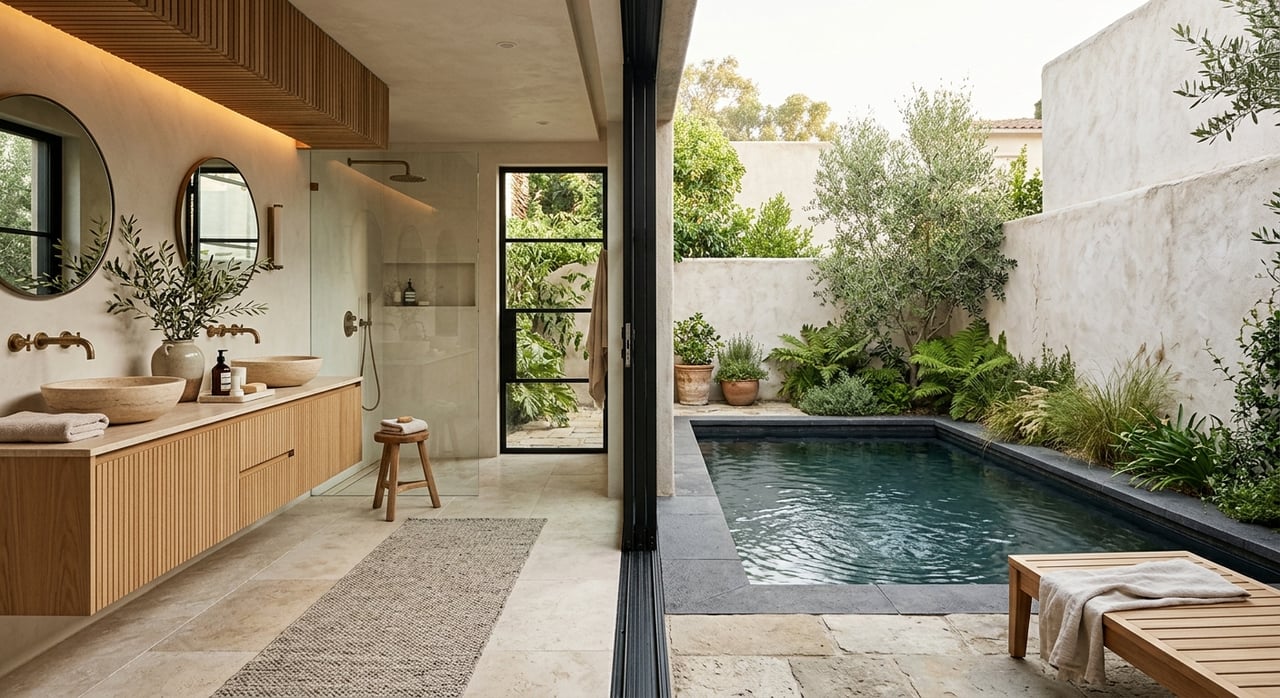
What does it really mean to live like you are on vacation every day? In Paradise Valley, that idea is less about spectacle and more about space, privacy, mountain views, and a seamless connection between home and outdoors. If you are considering a move, a second home, or a lifestyle upgrade in this part of the Valley, this guide will show you how resort-style living takes shape here and why it feels so distinct. Let’s dive in.
Paradise Valley Sets the Tone
Paradise Valley describes itself as a premier, low-density, largely residential community known for beautiful neighborhoods and luxurious homes. The Town’s 2022 General Plan reinforces that identity with a vision centered on one-acre residential living, natural open space, and partnerships with existing resorts.
That balance matters. You are not choosing a dense hotel district or an urban entertainment corridor. You are choosing a residential setting where luxury hospitality is part of the backdrop, while the home-centered lifestyle remains the main event.
The setting also plays a major role in the experience. Paradise Valley sits between Camelback Mountain, the Phoenix Mountain Preserve, and the McDowell Mountains, and the Town reports an average of 294 sunny days per year.
What Resort-Style Living Means Here
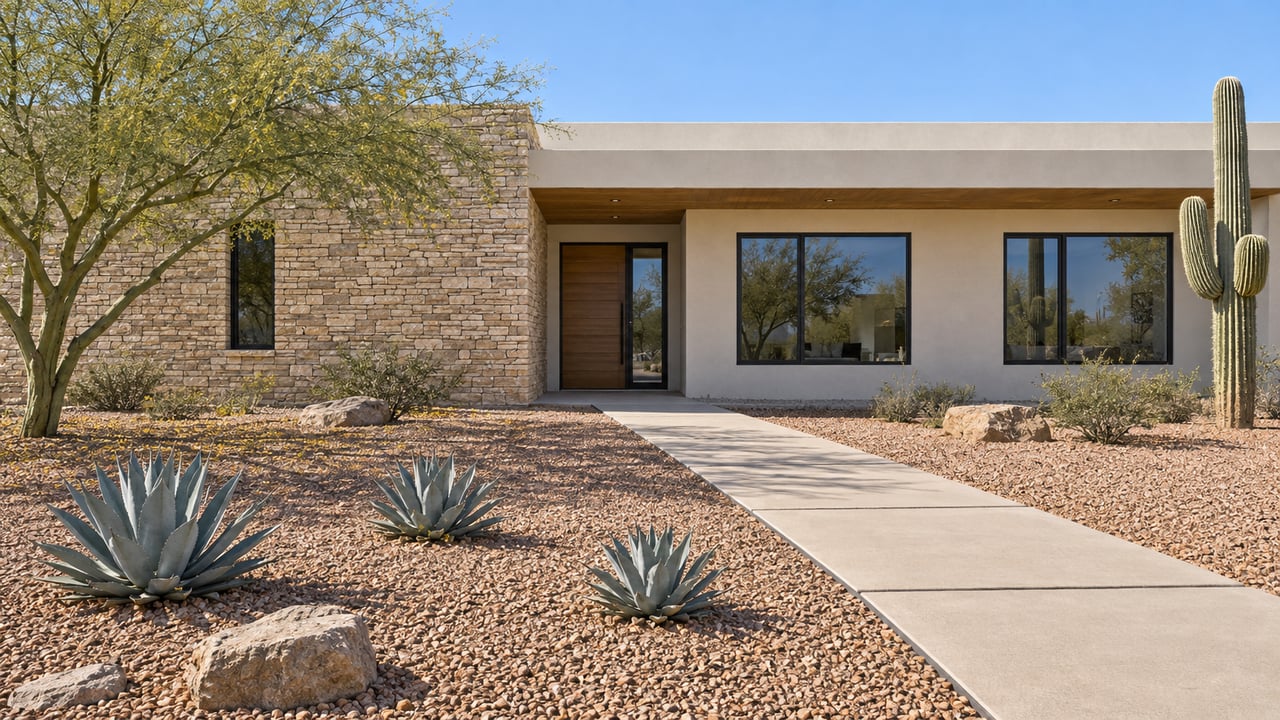
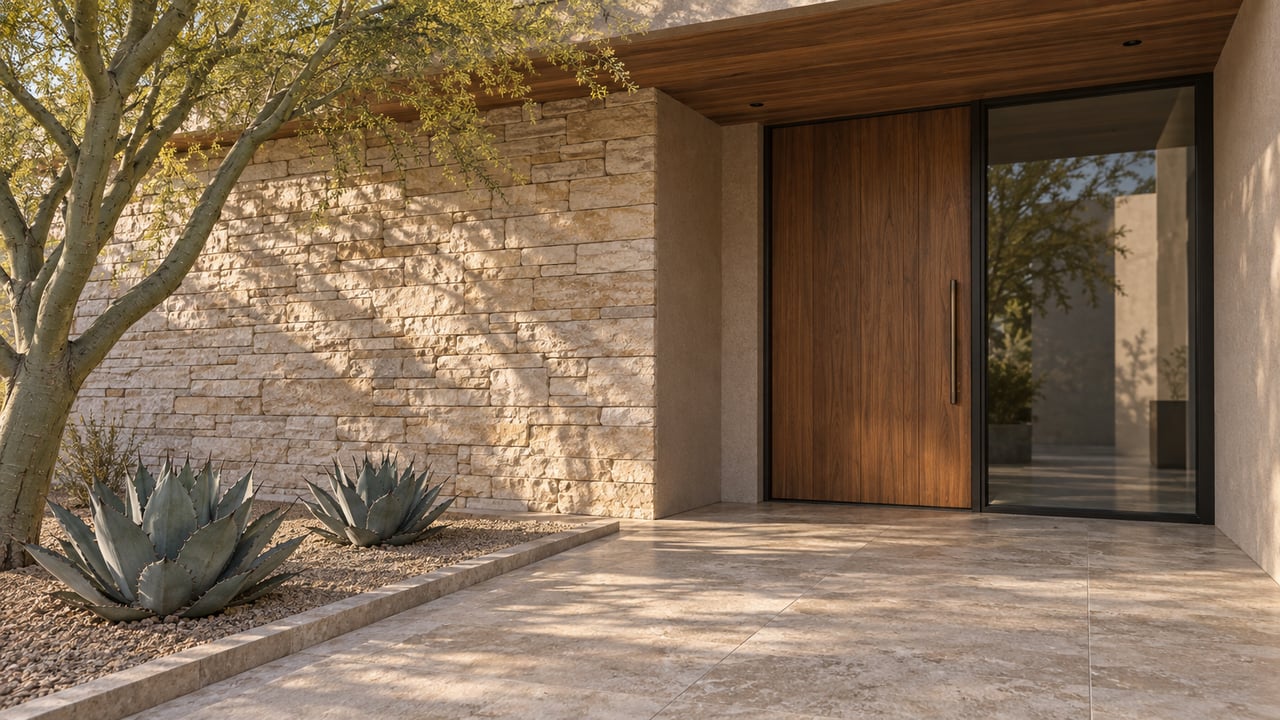
In Paradise Valley, resort-style living usually feels calm, private, and architectural. The Town emphasizes preserving dark skies, tranquility, open space, and mountain views, with low-density design that respects the Sonoran Desert setting.
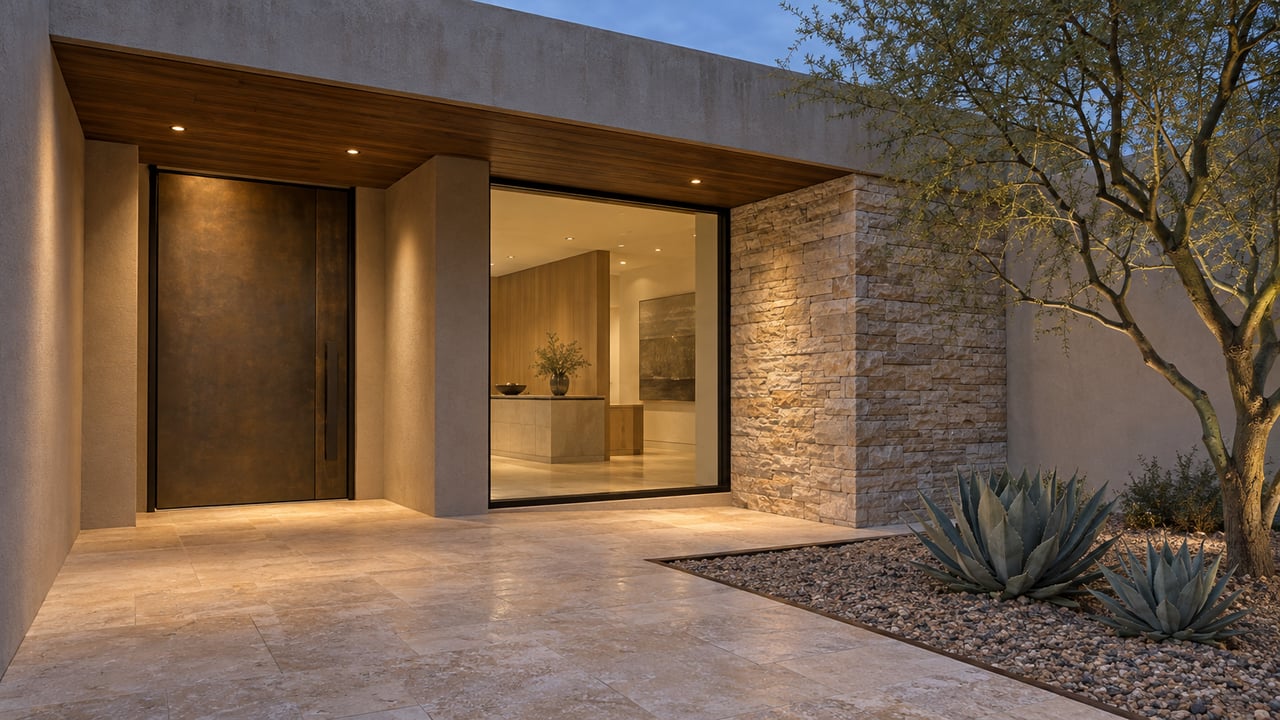
That creates a different kind of luxury. Instead of feeling crowded or overbuilt, many properties are designed to frame the landscape, protect privacy, and make outdoor living part of your daily rhythm.
The Town’s permit materials give a helpful picture of the features commonly associated with local homes. They explicitly recognize single-family residences, guest houses, ramadas, fountains, sport courts, pools, and spas.
The Town also defines a courtyard as a private landscaped outdoor living space adjoining the main house and enclosed by walls or portions of the home. In practice, that often supports a compound-like feel, with outdoor rooms, detached guest quarters, and pool areas that extend the living experience beyond the main structure.
Outdoor Living Comes First
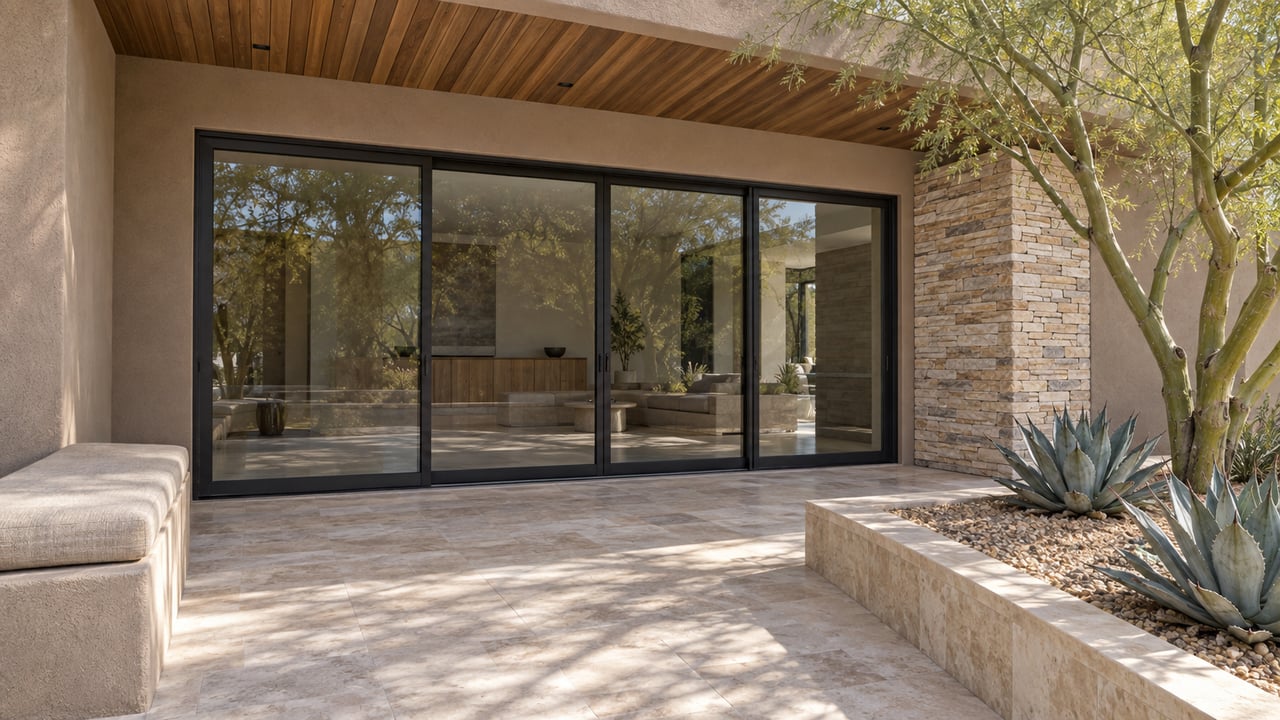
One of the clearest signs of resort-style everyday living in Paradise Valley is how naturally life moves outdoors. The climate supports that habit, and the design of many homes makes the transition feel easy and intentional.
You may find yourself starting the morning in a courtyard, having coffee under a ramada, or opening large doors to a patio that feels like a second living room. In this setting, outdoor space is not an afterthought. It is part of how the home functions.
That sense of continuity is also shaped by local planning priorities. The General Plan highlights scenic preservation, minimal nighttime lighting, and desert-sensitive design, all of which help protect the peaceful atmosphere many buyers are looking for.
Mountains Shape Daily Routine
Paradise Valley’s surroundings make movement and views part of everyday life. The Town’s visiting information places the community near Camelback Mountain, the Phoenix Mountain Preserve, and the McDowell Mountains, giving residents close access to iconic desert scenery.
For many people, that means the day begins with time outside. The City of Phoenix describes Camelback Mountain’s Echo Canyon Trail as an extremely difficult summit hike with 360-degree views, and Cholla Trail as another extremely difficult route with panoramic Valley views from the summit.
Even if you are not planning a summit hike, the presence of these landscapes changes how the town feels. The mountains are not distant scenery. They are part of the daily visual experience and a major reason the resort tone feels constant rather than staged.
Resorts Enhance the Lifestyle
Resort amenities are woven into Paradise Valley’s identity. The Town’s official resort directory includes Camelback Inn, Mountain Shadows, Omni Montelucia, Sanctuary Camelback Mountain, Hermosa Inn, Andaz, DoubleTree, Scottsdale Plaza, SmokeTree, and the planned Ritz-Carlton Paradise Valley.
The Town’s General Plan also notes that residents and visitors enjoy fine dining, golf, tennis, spa offerings, and luxury hotel accommodations. For you as a homeowner, that means elevated experiences are close at hand without requiring you to live inside a commercial resort environment.
This is one of the town’s most appealing contrasts. You can have a quiet residential address and still be minutes from spa treatments, golf, dining, and polished social settings that feel like an extension of your lifestyle.
Wellness Feels Built In
In Paradise Valley, wellness is not a special occasion. It often becomes part of the weekly rhythm because of how closely home life and resort amenities intersect.
Sanctuary Camelback Mountain spans 53 acres and promotes multiple pools, a spa, fitness, tennis, pickleball, and nearby hiking trails. JW Marriott Camelback Inn highlights heated outdoor pools, a day spa, 18-hole golf courses, tennis, bikes, and accommodations with outdoor living spaces.
Omni Scottsdale Resort & Spa at Montelucia says it offers six dining outlets and sits about a mile from Camelback Mountain. Taken together, these offerings help explain why wellness here can feel less like planning and more like habit.
Dining Adds to the Everyday Experience
Resort-style living is also shaped by where and how you spend your evenings. The Town’s restaurants page highlights dining at Camelback Inn, Montelucia, Hermosa Inn, Sanctuary, Mountain Shadows, Andaz, and DoubleTree.
That concentration of resort dining gives the town a polished social layer without changing its residential character. A relaxed patio dinner, poolside lunch, or drinks with mountain views can feel surprisingly accessible when those settings are part of your local routine.
Mountain Shadows helps illustrate the point. Its dining materials emphasize a scenic patio, poolside service, a short course, and views of Camelback Mountain and Mummy Mountain, which mirrors the larger Paradise Valley lifestyle of landscape, leisure, and understated luxury.
Privacy Still Leads the Experience
A common question from buyers is whether a place with so many luxury amenities can still feel quiet and private. In Paradise Valley, the answer is yes, and that is largely by design.
The Town’s short-term rental page describes Paradise Valley as a premier, low-density, largely residential community and states that protecting quiet neighborhoods is a goal. The General Plan supports that character through low-density development, desert landscaping, and scenic preservation.
The Town also notes that new non-residential land uses are limited to special use permit properties. That policy helps preserve the residential feel, even as the town remains closely associated with luxury hospitality.
What This Means for Buyers
If you are exploring Paradise Valley as a primary residence, second home, or seasonal retreat, the ownership picture offers useful context. According to the General Plan, about 87% of homes are owner occupied, while roughly 8% are seasonal or used occasionally and 7% are rented.
That mix suggests a market where full-time ownership still dominates, while second-home use is also part of the local landscape. For buyers who value a lock-and-leave rhythm, that can be an appealing sign.
The Town’s permit portal also includes Pool/Spa and Short-Term Rental permits. That does not define every property, of course, but it does show that vacation-oriented ownership and property management are recognized parts of the local environment.
Why the Lifestyle Has Staying Power
Paradise Valley’s appeal is not built on a passing trend. It is supported by planning choices that consistently favor low-density residential living, scenic protection, and a strong relationship with established resorts.
The future Ritz-Carlton Paradise Valley points in the same direction. Town project materials say it will include luxury casitas, a desert-inspired spa, a 400-foot pool, restaurants, and event space, reinforcing that hospitality, wellness, and design will remain central to the town’s broader identity.
For buyers who want more than square footage, this matters. You are not just purchasing a house. You are stepping into a place where architecture, landscape, privacy, and hospitality work together to shape daily life.
If you are considering Paradise Valley, the right home is often the one that translates this lifestyle in a personal way, whether that means mountain views, a true courtyard layout, detached guest space, or a pool and spa designed for year-round use. For a discreet, design-minded conversation about buying or selling in Paradise Valley, connect with Artie Baxter.
FAQs
What makes Paradise Valley feel resort-like for everyday living?
- Paradise Valley combines low-density residential living with close access to luxury resorts, dining, golf, spas, tennis, and mountain scenery, while still prioritizing privacy, open space, and tranquility.
What home features support resort-style living in Paradise Valley?
- Common features recognized in Town permit materials include pools, spas, ramadas, fountains, sport courts, guest houses, and private courtyards that extend living space outdoors.
What does the Town of Paradise Valley prioritize in residential design?
- The Town emphasizes one-acre residential living, dark skies, mountain views, open space, low-density development, and design that respects the Sonoran Desert setting.
What outdoor lifestyle options are near Paradise Valley homes?
- Residents are close to Camelback Mountain, the Phoenix Mountain Preserve, and the McDowell Mountains, with nearby hiking and a strong everyday connection to desert landscapes.
What should second-home buyers know about Paradise Valley ownership patterns?
- The Town’s General Plan says about 87% of homes are owner occupied, around 8% are seasonal or used occasionally, and 7% are rented, which shows that second-home ownership exists within a primarily owner-occupied community.