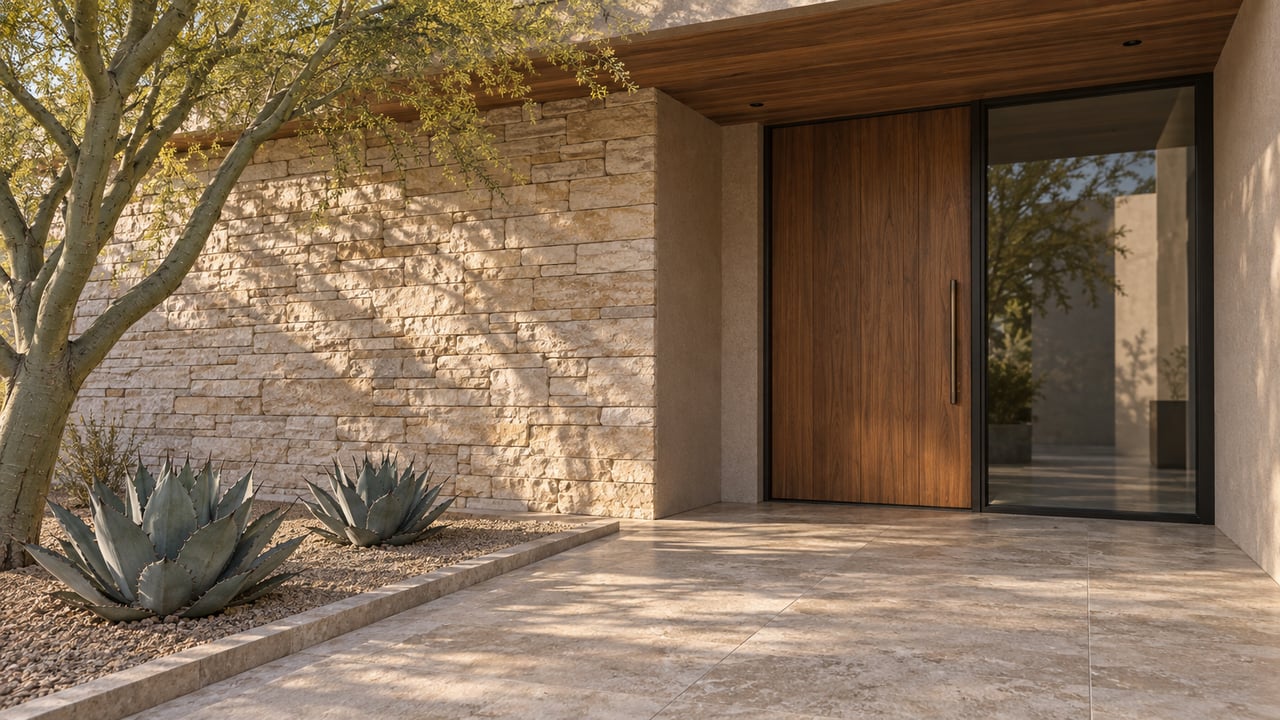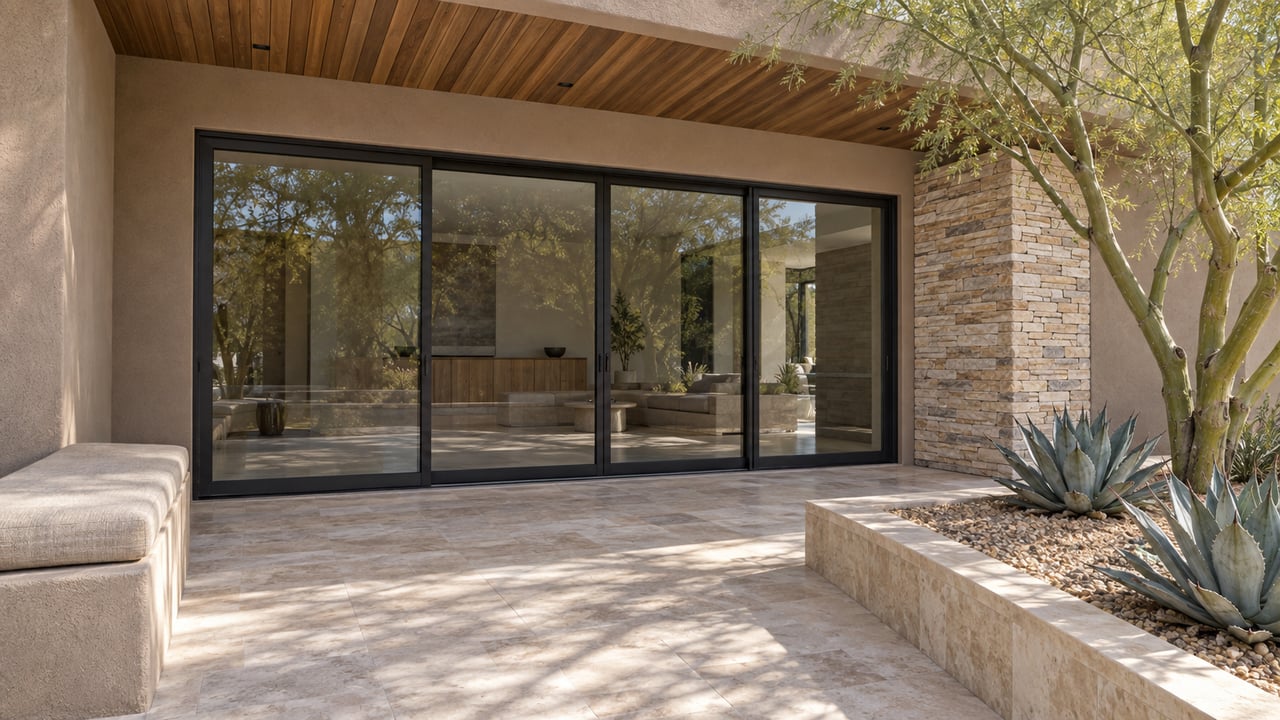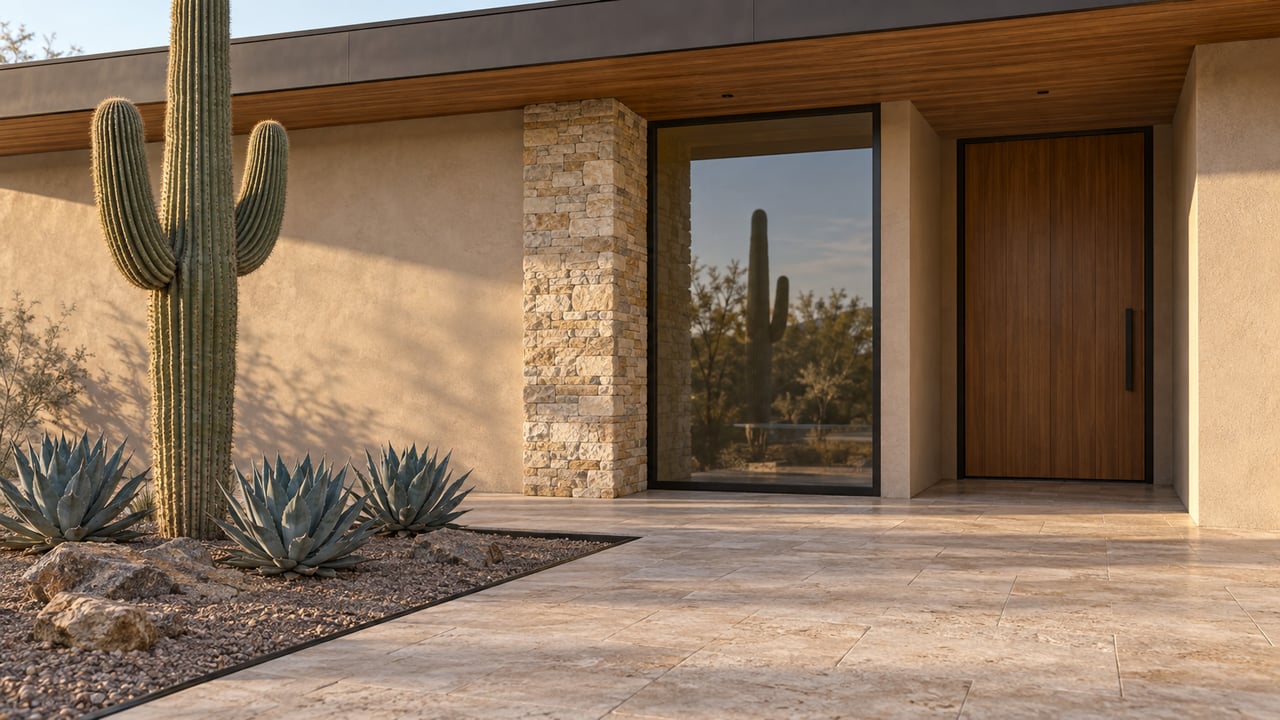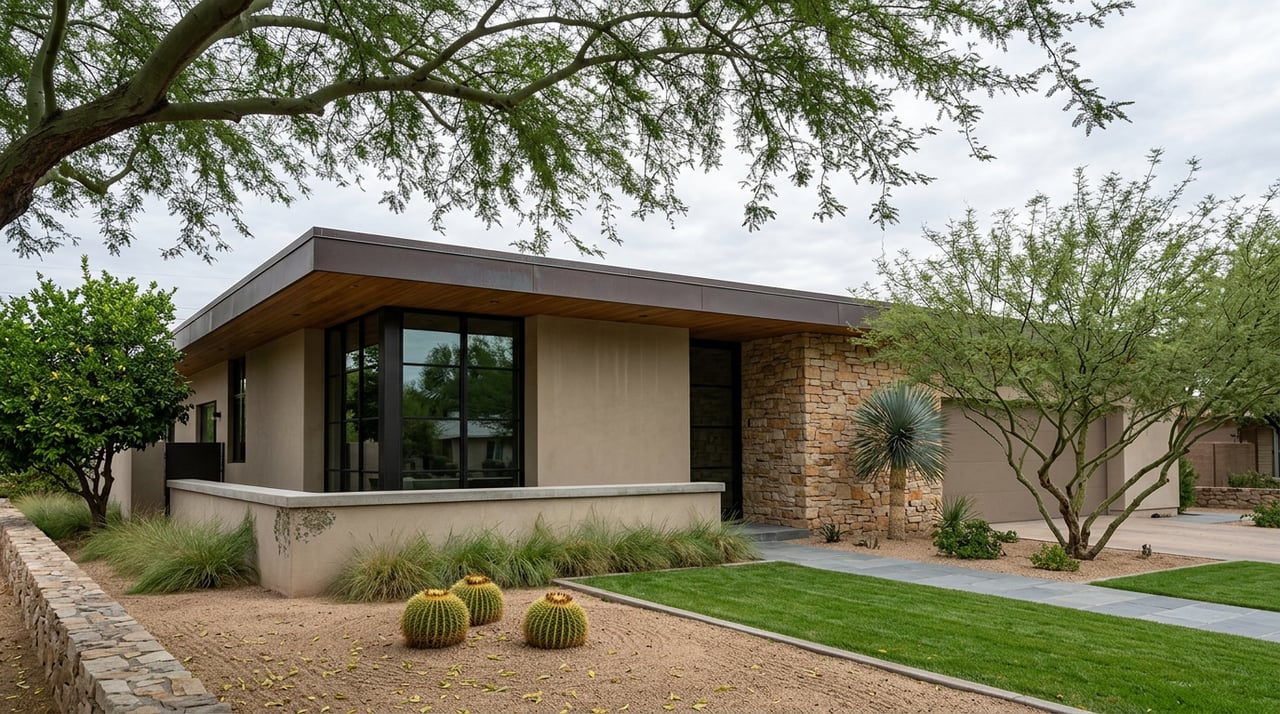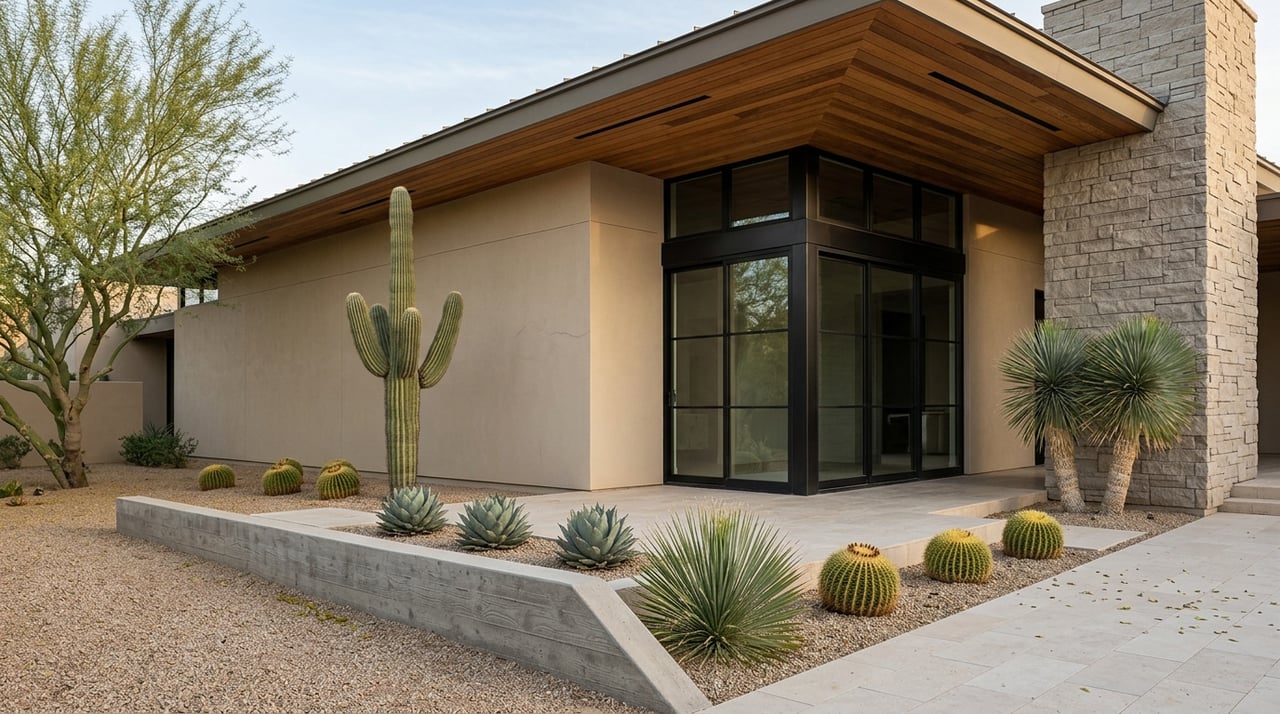
You can spot a true Paradise Valley desert modern home almost instantly. It does not fight the land or try to outshine the mountains. Instead, it settles into the site with quiet confidence, using shade, texture, and restrained lines to make the desert feel like part of daily life. If you are drawn to architecture that feels both refined and grounded, this guide will help you understand what makes Paradise Valley’s version of desert modern so distinctive. Let’s dive in.
Why desert modern fits Paradise Valley
Paradise Valley is shaped by open space, mountain views, and a planning approach that prioritizes natural character. The town’s 2022 General Plan describes a primarily one-acre residential community focused on aesthetics, natural open space, and preservation of its special character through land-use enforcement. That setting naturally favors homes that feel connected to the landscape rather than imposed on it.
The local terrain also matters. Official town materials highlight ridgelines, slope, elevation, and hillside parcels, which tells you that building here is closely tied to topography. In Paradise Valley, architecture is often experienced as part of the landform itself.
What desert modern means here
Desert modern in Paradise Valley is not just a modern house with clean lines. It is a regional response to climate, site, and views. The best examples feel low, calm, and deliberate, with forms that frame the horizon instead of competing with it.
A helpful regional reference point is Frank Lloyd Wright’s Taliesin West. The property is known for low-slung buildings, local desert masonry, redwood beams, terraces, pools, walkways, and gardens arranged in a nearly seamless indoor-outdoor composition. That design language still echoes through many of the area’s most memorable homes.
Hallmarks of Paradise Valley desert modern
Horizontal massing
One of the clearest traits is horizontal massing, or low, elongated forms that echo the desert horizon. Instead of reaching upward, these homes stretch outward. That creates a stronger relationship with mountain silhouettes and gives the architecture a more settled presence.
This low profile also supports privacy and visual compatibility. In a town defined by open lots and protected views, a home that stays close to the land often feels more authentic to its setting.
Deep shade and overhangs
In a climate where average highs top 100 degrees in June, July, and August, shade is not a luxury. It is a design necessity. That is why desert modern homes often use deep rooflines, recessed glass, and cantilevered overhangs to shield interiors and patios from direct sun.
These overhangs do more than make a house look dramatic. They help control solar gain, soften glare, and make outdoor spaces more usable throughout the day. In Paradise Valley, that function is part of the beauty.
Pocketing glass and indoor-outdoor flow
Another signature move is the use of large sliding walls and pocketing glass doors that disappear into the walls. This blurs the edge between inside and outside, allowing great rooms, patios, and courtyards to read as one connected living environment.
When done well, the transition feels effortless. You move from a cool interior to a shaded terrace, past a pool or garden, without a hard break in the experience. That flow is one reason desert modern homes often feel larger and calmer than their square footage alone might suggest.
Tactile, site-grounded materials
Paradise Valley desert modern homes often rely on materials that feel natural and grounded. Local examples have used rammed earth, limestone, Douglas fir, metal, concrete, and glass to create homes that feel both contemporary and rooted in place.
The material palette is usually restrained rather than flashy. You will often see stone, concrete, wood, and desert masonry working together to add warmth, thermal mass, and texture. The result is a house that feels substantial in the right way.
Courtyards and atriums
Many of the strongest homes organize space around an atrium or courtyard. This creates an open-air room at the center of the plan, bringing daylight and breezes deeper into the house. It also gives the architecture a more private and composed rhythm.
In practical terms, courtyards can make a large home feel more intimate. They create moments of pause, connect separate wings, and support the kind of indoor-outdoor living that defines the style.
Why climate shapes the look
Paradise Valley shares the broader Phoenix climate pattern, and the numbers explain a lot. NOAA’s 1991 to 2020 normals for Phoenix Deer Valley show a mean annual temperature of 72.5 degrees and annual precipitation of 8.90 inches. In a hot, dry environment like this, homes need to manage heat and sun carefully.
That is why features like thermal mass, shaded glazing, and protected outdoor areas matter so much. Thick walls, recessed openings, and broad roof planes are not just aesthetic choices. They are practical responses that help a home feel comfortable and livable.
How local rules influence design
In Paradise Valley, style is also shaped by local review standards. The town’s hillside and non-hillside guide includes rules for desert landscaping, limits on non-native species, restrictions on flammable grasses, controls on outdoor lighting, and requirements that roof and paint colors blend with the surroundings using low-reflectance finishes.
Even driveway materials are guided toward low-glare options like textured concrete and pavers. These details may seem small, but together they reinforce the quiet, land-sensitive look that defines the area.
For hillside properties, the design review process can be especially detailed. Applications may require topography exhibits, grading and drainage plans, lighting plans, landscape plans, native plant preservation plans, and material sample boards. That level of review reflects how seriously the town treats site-specific design.
What makes a home feel authentic
A home tends to feel most authentic to Paradise Valley when the massing follows the land, the materials stay restrained, and the outdoor rooms are shaded and intentional. The architecture should support mountain views, privacy, and compatibility with the desert setting rather than overwhelm them.
That does not mean every home looks the same. It means the strongest homes share a certain discipline. They respect the site, use materials thoughtfully, and let the landscape do part of the work.
What buyers should notice on a showing
If you are touring a desert modern home in Paradise Valley, look beyond the clean lines. Ask how the home handles late-afternoon sun, whether the glazing is recessed or shaded, and whether patios work as true daily-use spaces rather than decorative add-ons.
It is also smart to notice how the landscape responds to desert conditions. On hillside or wash-adjacent properties, grading and drainage deserve close attention. In this market, the difference between a home that merely looks modern and one that lives beautifully often comes down to these quieter details.
Why the style supports daily living
One of the reasons desert modern resonates so strongly in Paradise Valley is that it can make outdoor space feel truly livable. Patios become dining rooms, pools become visual anchors, and sliding walls let the main living area expand naturally into the landscape.
That creates a home that changes with the time of day. Morning light, afternoon shade, and evening mountain silhouettes all become part of the experience. For design-minded buyers and sellers, that is often the real appeal.
Why this matters for buyers and sellers
If you are buying in Paradise Valley, understanding desert modern helps you evaluate a home more clearly. You can look past surface-level finishes and focus on the elements that support comfort, site fit, and long-term appeal.
If you are selling, these same details shape how your property should be presented. In a design-conscious luxury market, architecture, materials, and landscape integration are not background features. They are part of the property’s story and part of how value is understood.
For a property with architectural merit, thoughtful positioning matters. The right presentation can help a buyer see not only the home itself, but also how it belongs to Paradise Valley.
If you are considering buying or selling a design-forward home in Paradise Valley, working with an advisor who understands architecture, presentation, and the nuances of this market can make a meaningful difference. Connect with Artie Baxter for a discreet, high-touch conversation.
FAQs
What defines desert modern architecture in Paradise Valley?
- Desert modern architecture in Paradise Valley is typically defined by low horizontal massing, deep overhangs, shaded glass, tactile materials like stone or rammed earth, and a strong indoor-outdoor connection shaped by the desert climate and topography.
What should Paradise Valley buyers look for in a desert modern home?
- Paradise Valley buyers should pay attention to shade, recessed or protected glazing, usable patios, site drainage, landscape compatibility with desert conditions, and how well the home fits the lot’s slope, wash, or mountain views.
How do Paradise Valley hillside rules affect home design?
- Paradise Valley hillside rules can affect landscaping, exterior colors, lighting, materials, and even some replacement work, which means design choices and exterior updates may require review depending on the property and scope of work.
Why are outdoor spaces so important in Paradise Valley desert modern homes?
- Outdoor spaces are important because the style is designed around daily indoor-outdoor living, with patios, courtyards, pools, and shaded terraces functioning as practical extensions of the interior.
How is Paradise Valley desert modern different from generic modern design?
- Paradise Valley desert modern differs from generic modern design because it is more closely tied to heat, sun control, desert plantings, mountain views, low-reflectance finishes, and a site-sensitive relationship with the land.